
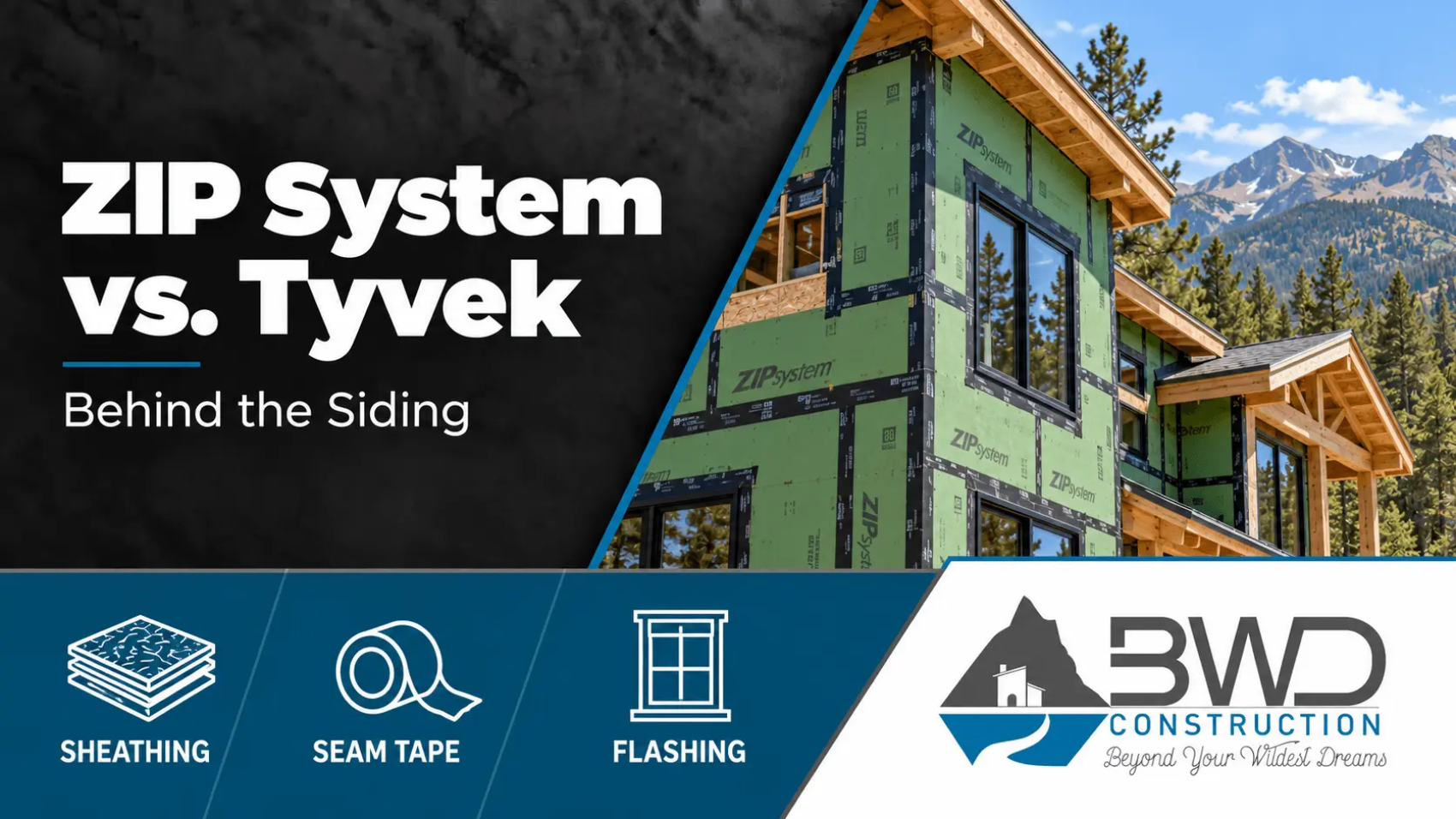
If you’ve watched a home take shape before the siding goes on, you may have noticed bright green panels covering the exterior. In our recent jobsite video, those panels prompted a question we often hear: Why isn’t there any Tyvek?
The green surface is part of ZIP System, a structural sheathing system with a built-in weather barrier. At BWD Construction, we like how it brings several important parts of the wall assembly together while simplifying the installation process.
For homeowners planning a build in Pagosa Springs, Durango, or South Fork, understanding what goes behind the siding can help you ask better questions about your future home. These materials will eventually be hidden, but their role continues long after construction is complete.
What Is ZIP System?
ZIP System combines engineered wood sheathing with a factory-applied water-resistive barrier. The panels attach to the framing, and compatible ZIP System tape seals the panel seams.
Together with properly detailed openings and transitions, the panels and tape form an exterior air and water-resistive barrier. This integrated approach eliminates the need for a separate conventional housewrap layer in typical approved wall assemblies.
The green panels are not the finished siding. They are part of the protective wall assembly beneath it. Your siding provides the exterior appearance, while the layers behind it help manage water and unwanted air movement.
How Does ZIP System Compare With Tyvek?
With a traditional approach, builders install structural sheathing and then cover it with a separate housewrap, such as Tyvek HomeWrap. The wrap must be properly fastened, overlapped, sealed, and integrated with flashing.
ZIP System incorporates the water-resistive layer into the sheathing itself. Instead of wrapping the exterior after sheathing, the crew seals the panel joints and completes the necessary flashing and connection details.
Both approaches can work well. Tyvek HomeWrap is designed to resist bulk water and air penetration while allowing moisture vapor to pass through. It can serve as an effective air barrier when installed and sealed as a complete system.
Our preference for ZIP System comes from its integrated design and the straightforward installation sequence described in our video. The choice still depends on careful workmanship: neither product makes an unfinished seam or poorly flashed window disappear.

Why We Like the Integrated Approach
One of the practical advantages we discuss in the video is the ability to install the sheathing and tape the seams as the work progresses. The weather-resistive surface is already bonded to the panels, so there is no separate roll of housewrap to install across the wall.
That gives our team a clear sequence: install the panels, seal the joints, address openings and transitions, and inspect areas that need attention before covering the assembly.
This is the kind of construction decision homeowners may never see in the finished house. Yet it deserves the same thoughtful consideration as the more visible selections. A beautiful exterior starts with understanding how every layer beneath it will work.
Why Air Sealing Matters in Southwest Colorado
When homeowners think about keeping a mountain home comfortable, insulation is often the first thing that comes to mind. Air sealing deserves attention, too.
Insulation slows heat transfer through the building assembly. An air barrier limits uncontrolled air movement through gaps and connections. Without effective air sealing, outdoor air can enter and conditioned indoor air can escape, contributing to drafts and unnecessary heating or cooling demand.
A properly connected ZIP System assembly can support that air-control strategy. However, the overall result depends on the entire enclosure, including connections at the foundation, roof, windows, and doors.
For a home in Southwest Colorado, the useful question is how the insulation, air sealing, and ventilation will work together. A tighter enclosure should be paired with planned ventilation to provide fresh air. No sheathing brand alone guarantees a particular utility bill or level of airtightness.
The Installation Details Make the Difference
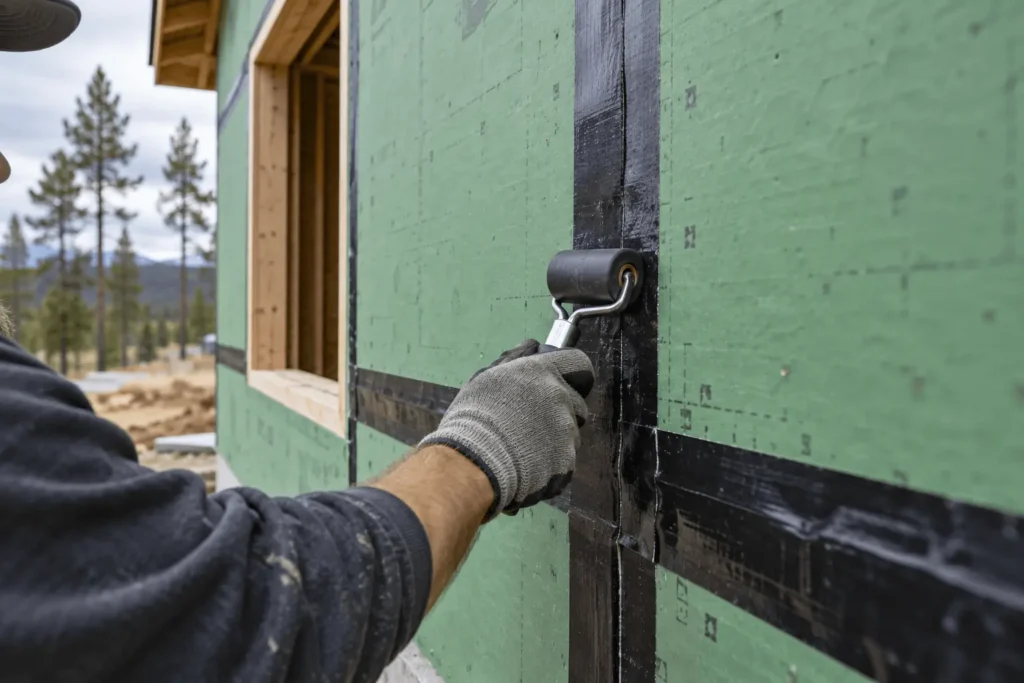
The tape visible in our video plays an essential role. Panel seams need to be sealed correctly, and ZIP System tape must be rolled to establish the required bond.
Windows, doors, corners, and service penetrations also require careful detailing. These are places where different materials meet or openings interrupt the wall’s protective layers.
The video also mentions returning to address punctures or damaged areas. That inspection matters. Damage and fastening issues must be assessed and corrected according to the manufacturer’s instructions before the work is concealed.
For homeowners, this is a valuable question to ask any builder: How will the exterior barrier be checked before the siding goes on? A quality product delivers its intended benefits through proper installation and attention to the details around it.
What Happens Before the Siding Goes On?
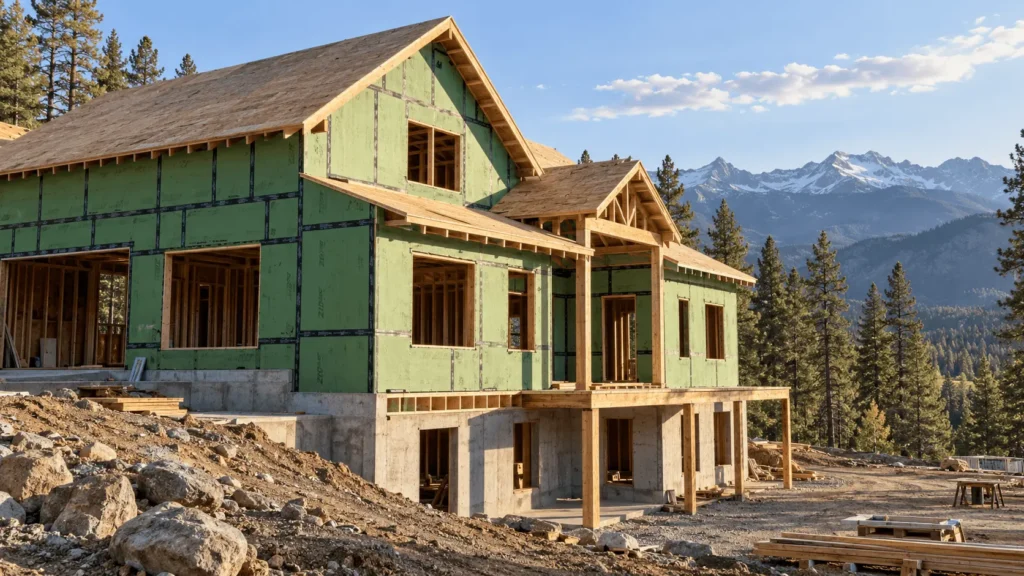
Once the barrier and flashing details are complete, the wall can be prepared for its exterior finish. The exact assembly depends on the selected siding and its installation requirements.
Some claddings require additional drainage provisions, an air space, or other layers. ZIP System does not remove those requirements.
It is also more accurate to describe the panels as water-resistant than to call the entire unfinished house waterproof. Long-term protection relies on the complete assembly, including flashing, drainage, roofing, and exterior finishes.
Plan Your Southwest Colorado Home With BWD Construction
Choosing materials is one part of building a home that suits your property and the way you want to live. Understanding why those materials are selected helps make the process clearer.
At BWD Construction, we bring our Southwest Colorado experience to those conversations, from early planning to the details that will eventually sit behind your finished walls.
If you’re considering a custom home in Pagosa Springs, Durango, or South Fork, complete our project intake form to tell us about your plans. We’d be glad to discuss your goals and the next steps for your build.