

A mountain view may be what draws you to a Colorado property, but the utilities beneath the surface can have just as much influence on the home you build. Before choosing a floor plan or deciding where the driveway should go, you need to know where your water will come from and how your wastewater will be handled.
Understanding well and septic systems in Colorado, along with municipal and district utility connections, helps you ask better questions before committing to a lot. For homeowners planning a build in Pagosa Springs, Durango, or South Fork, these answers belong near the beginning of the process.
At BWD Construction, we encourage you to consider utilities as part of the whole property plan. Here is what to investigate before moving forward.
Start With Two Questions: Water Supply and Wastewater
A well and a septic system serve different purposes. A well supplies groundwater to the home. A septic system treats wastewater on the property. Public water and sewer systems provide those services through shared infrastructure, which may be operated by a municipality, special district, or another provider.
| Service | What it does | What to verify first |
|---|---|---|
| Private well | Supplies water from the ground | Permit, allowed uses, water production, and quality |
| Public water | Delivers water through a provider’s system | Service eligibility, capacity, connection location, and fees |
| Septic system | Treats and disperses wastewater on site | Site suitability, approved design, and local permits |
| Public sewer | Conveys wastewater to a shared treatment system | Service availability, connection requirements, and fees |
Verify water and wastewater separately. A property may have public water but require septic, or use a permitted well with public sewer where that arrangement is approved. The available combination depends on the parcel and applicable requirements.
Municipal Water and Sewer: Confirm More Than a Nearby Line
A listing that says “utilities nearby” leaves several important questions unanswered. A line along the road does not establish that your planned home has an approved connection, that all fees have been paid, or that the line can serve the proposed use.
Before buying land or finalizing your design, ask the provider:
- Is this parcel inside your service area, and can you serve the proposed home?
- Are both water and sewer available?
- Where are the approved connection points?
- Will the project require a main extension, easement, or road crossing?
- Which connection, meter, capacity, and recurring charges apply?
- Who installs and maintains the service lines?
- Is connection required under the applicable local rules?
A useful local example is the Pagosa Area Water and Sanitation District’s new-connection information. PAWSD lists connection charges separately from system capital investment fees and explains that some properties may need a main line extension.
Request written confirmation tied to the parcel and your plans. An itemized estimate makes it easier to understand what is included and what your contractor must price separately.
Private Wells in Colorado: Check the Permit and the Water
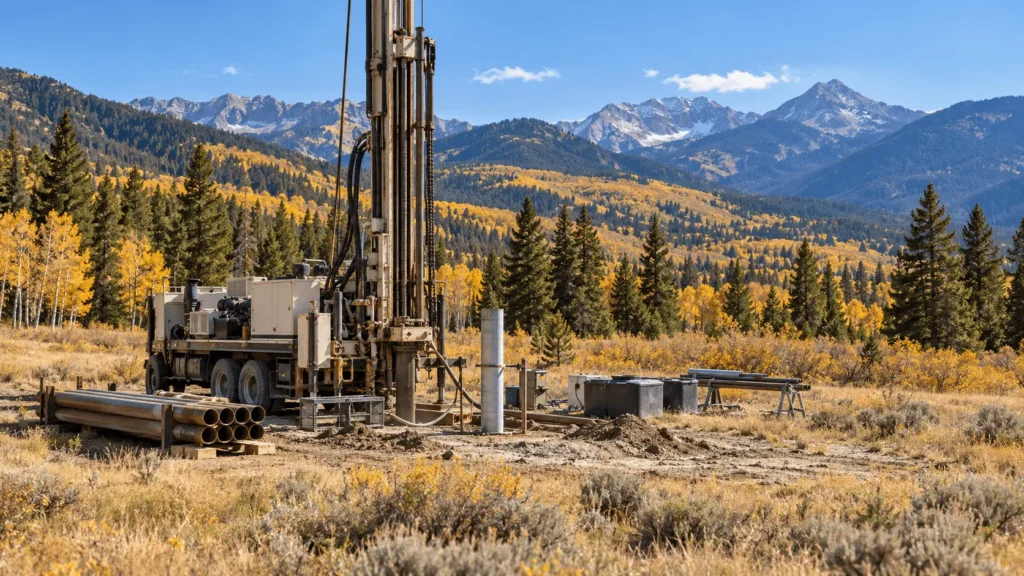
If public water is unavailable, investigate well feasibility before assuming you can drill. Colorado requires a permit for a new groundwater well, and the Colorado Division of Water Resources provides permit information, records searches, and guidance on the appropriate application.
The uses allowed by the permit matter as much as the presence of the well. A household-use-only permit does not automatically allow lawn or garden irrigation. Before planning landscaping, animals, or an additional dwelling, verify the actual permit conditions and any required approvals.
For an existing well, gather the permit, construction records, available pumping information, and recent water-quality results. Ask a qualified well professional to evaluate its condition and ability to meet the home’s needs. A nearby well can provide useful background, but it cannot establish what your property will produce.
For a new installation, request a scope that addresses drilling, casing, the pump, electrical work, pressure equipment, testing, and any treatment or storage that may be needed. This gives you a more useful planning figure than a drilling price alone.
Septic Systems: Let the Site Guide the Design
When public sewer is unavailable and an on-site system is permitted, a septic system may provide the wastewater solution. In Colorado, these systems are formally called on-site wastewater treatment systems, or OWTS.
A conventional system includes a tank and a soil treatment area, often called a drainfield or leach field. The system needs suitable land beyond the space occupied by the tank itself.
Colorado’s Regulation 43 establishes statewide minimum standards, while local authorities administer residential permitting under their regulations. Site and soil evaluation helps determine whether the property can support the proposed system.
Your designer will consider soil conditions, seasonal groundwater, bedrock, slope, required separation distances, and expected wastewater flow. Bedroom count can affect residential system sizing, so discuss future additions while the system is being planned.
Steep terrain or challenging soils may require an engineered solution. For example, La Plata County’s OWTS permit guidance identifies conditions that may require professional engineering and sets out the sequence from evaluation through installation and final approval.
Coordinate the septic layout with the house, driveway, well, and outdoor spaces. Ask whether a replacement area must be reserved, and keep the approved treatment area clear of conflicting construction. Resolving these details early can prevent an otherwise appealing floor plan from becoming difficult to place on the lot.
Where to Start in Pagosa Springs, Durango, and South Fork
Local knowledge starts with identifying the right provider and permitting office for the actual parcel.
Pagosa Springs and Archuleta County: Check whether PAWSD serves the property and which services are available. For on-site wastewater questions, the Archuleta County Water Quality Department provides current regulations, application information, and inspection guidance.
Durango and La Plata County: The City of Durango provides water and sewer within its service areas and directs new-connection inquiries to its Engineering Division. For properties needing septic, begin with La Plata County Public Health’s OWTS process.
South Fork and surrounding properties: The South Fork Water and Sanitation District describes its service as a community sewer system. Confirm sewer eligibility directly and investigate the drinking-water source separately. For property outside that service area, identify the county and responsible wastewater permitting office before proceeding.
If you are comparing lots in that area, our South Fork land-buying checklist covers other questions to address before making an offer.
Budget for the Complete Utility Installation
Compare what it will take to deliver working services to the house. The price of a well, septic tank, or utility connection is only one part of that calculation.
Depending on the property, request allowances or quotes for:
- Applications, evaluations, design work, and inspections.
- Connection charges and provider capacity or capital fees.
- Drilling, pumping equipment, water testing, and treatment.
- The complete approved septic installation.
- Trenching, rock excavation, service piping, and electrical work.
- Road crossings, easements, and disturbed-area restoration.
- Ongoing bills, maintenance, and eventual equipment replacement.
Ask each contractor to identify exclusions and conditions that could change the price. Two lots with similar asking prices may have very different utility budgets.
Scheduling deserves the same attention. PAWSD’s connection guidance notes that road-cut permissions and weather can affect the work. Build provider scheduling, permit review, and required inspections into the construction plan.
For a broader look at site preparation and due diligence, read Buying Land in Colorado Before Building: What to Check First.

Plan for Maintenance After Move-In
With a private well, water-quality testing becomes an ongoing homeowner responsibility. The CDC recommends annual testing for total coliform bacteria, nitrates, total dissolved solids, and pH, plus locally relevant contaminants. Use a state-certified laboratory and ask the local health department which additional tests are appropriate.
For septic systems, the EPA recommends professional inspection at least every three years for an average household system, with pumping typically every three to five years. Actual service needs depend on the system and its use; alternative systems may need more frequent attention.
With public utilities, ask the provider where homeowner responsibility begins and ends. Keep connection records, warranties, inspection documents, and service-line information together so future repairs are easier to organize.
Questions to Answer Before You Commit to a Lot
Before you move from browsing land to planning construction, aim to have clear answers to these six questions:
- Water: What approved supply will serve the home?
- Wastewater: Is sewer available, or has septic feasibility been evaluated?
- Layout: Can the house, driveway, utilities, and required clearances fit together?
- Cost: Which fees and construction expenses are included in the budget?
- Timing: What approvals and installation steps must happen before building and occupancy?
- Future plans: Will the proposed systems support the intended bedrooms, landscaping, and other approved uses?
Frequently Asked Questions About Colorado Home Utilities
Can I drill a well on any property in Colorado?
Owning land does not automatically establish permission to drill a well for your intended use. Start with the Colorado Division of Water Resources, review any existing permit, and confirm the permitting path for the specific parcel.
Does public water mean the property has public sewer?
No. Water supply and wastewater service are separate questions. Confirm each with the relevant provider; a property with public water may still require an approved septic system.
Is a well and septic system cheaper than municipal utilities?
There is no reliable answer without evaluating the site. Compare complete installation costs, required connection or capital fees, ongoing charges, maintenance, and replacement needs. A short public connection and a long main extension are very different projects.
Can I add bedrooms later if the property has septic?
Do not assume the existing approval covers an expansion. Bedroom count can affect wastewater design flow, and an addition may require review, a permit, or system modifications. Discuss future plans with the local authority and septic designer.
Plan Your Southwest Colorado Home With BWD Construction
The best time to understand your utilities is while you still have flexibility in the land, layout, and budget. Clear answers early help you move into design with a more realistic picture of what the property requires.
If you are planning a home in Pagosa Springs, Durango, or South Fork, BWD Construction would love to hear about your project. Share the property location, what you hope to build, and any utility information you have gathered.
Start your home-building inquiry with BWD Construction and take the next step toward a home that fits both your vision and the land.