
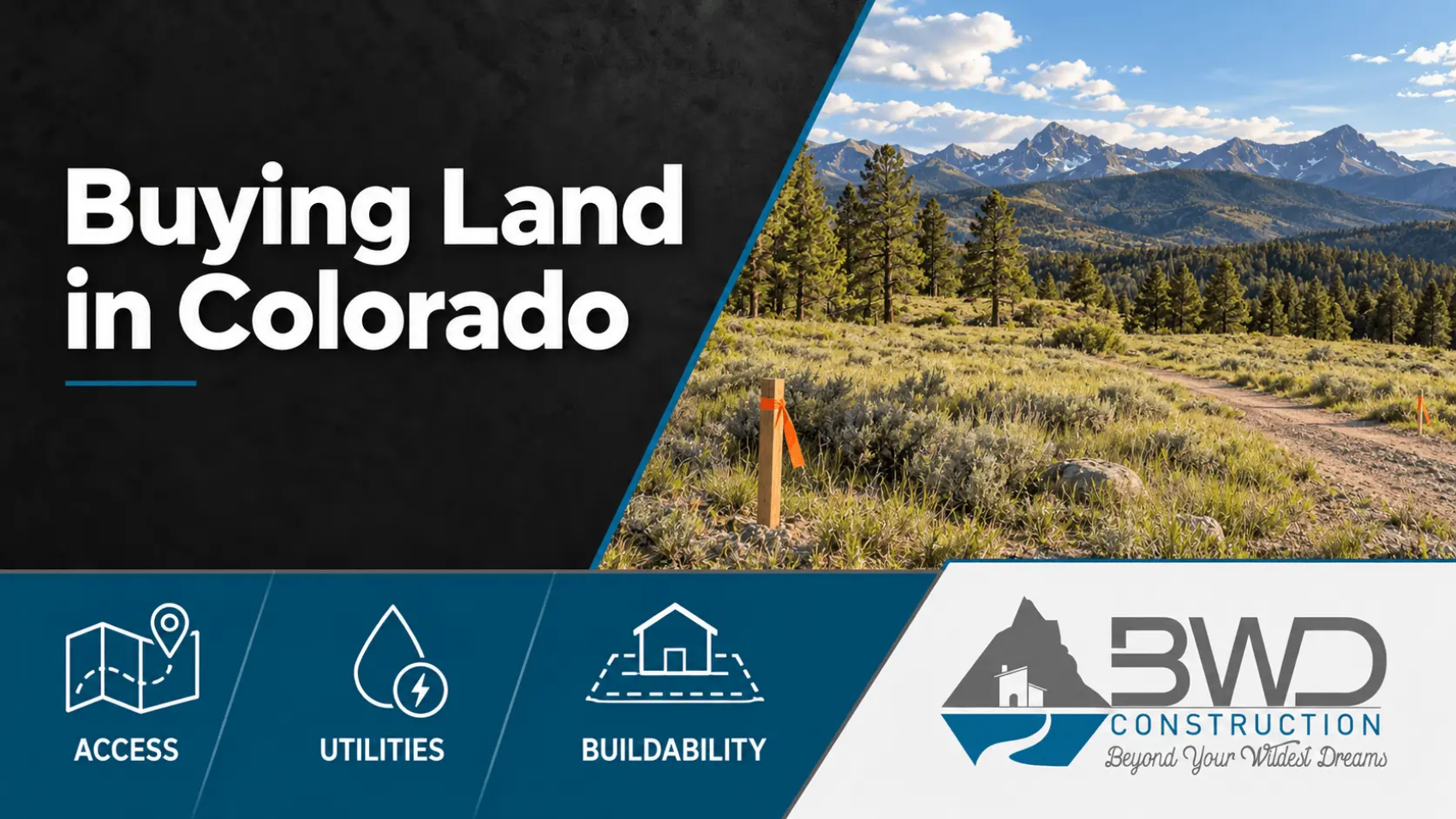
It is easy to fall in love with a Colorado property. You picture the mountain views from your living room, a deck for summer evenings, and enough space to enjoy the outdoors. But before you buy the land, there is a more practical question to answer: Can you build the home you want there, at a cost that makes sense?
In and around Pagosa Springs, two beautiful lots can come with very different construction needs. One may already have utilities nearby and a straightforward place to build. Another may need a long driveway, substantial site work, a well, or an engineered septic system. At BWD Construction, we encourage future homeowners to look at the land as part of the whole home project. Here is what to check before you commit.
Confirm What You Can Build
Start with the property’s jurisdiction and zoning. Is the parcel inside the Town of Pagosa Springs, in unincorporated Archuleta County, or somewhere else? The answer determines which planning and building offices you need to contact. Ask about permitted residential uses, setbacks, height and size limits, driveway requirements, and whether your plans for a guest house, workshop, or short-term rental are allowed. If the property belongs to a homeowners association, review its design rules as well.

Archuleta County’s mapping resources and the Town of Pagosa Springs zoning map are useful starting points. Then speak with the planning office about your specific parcel and proposed home. A listing that describes land as “buildable” is a starting claim, not an approval of your plans.
Check Boundaries, Easements, and Year-Round Access
Next, look closely at the survey, recorded plat, title documents, and easements. Where are the property lines? Does another owner have a right to cross the land? Is there a recorded route for your driveway and for any utility lines that need to reach the home? Ask what mineral interests or other recorded restrictions affect the parcel, too. A property can appear spacious while setbacks, easements, or terrain leave a much smaller usable building area.

Access also needs to work in real life. Consider the driveway’s length and grade, construction vehicle access, drainage, and who maintains or plows the road in winter. If the lot would connect directly to a state highway, Colorado’s Department of Transportation explains that a highway access permit is required. Before closing, have your surveyor, title company, and the appropriate road authority help you verify the route you intend to use.
Verify the Water Supply
Do not assume that a nearby water line means a connection is available, or that an undeveloped parcel will qualify for the well you have in mind. Ask the water provider whether it can serve the property, what a connection requires, and what fees or line extensions may apply. Around Pagosa Springs, the Pagosa Area Water and Sanitation District lists connection and system capital investment fees and notes that some properties may need a main line extension.
For a property that will depend on a well, review any existing permit and well records through the Colorado Division of Water Resources. Check the uses the permit allows and whether the well has construction, pump, or water-quality information available. If there is no well, make your plans only after checking the permitting path: the Division says it cannot guarantee that a new well permit will be issued before it evaluates an application. Water rights, well permits, and access to water are related questions, but they are not interchangeable.
Find Out Whether the Lot Can Support Wastewater Service
If public sewer is unavailable, the home may need an on-site wastewater treatment system, commonly called a septic system. Its feasibility depends on site conditions and the space needed for the system and replacement area. A good-looking location for the house may compete with the best location for the septic system, so both should be considered together.
Ask the local wastewater authority what site and soil evaluation is needed before you purchase. In Archuleta County, the Water Quality Department reviews septic designs and permit applications under its current on-site wastewater regulations. If public sewer is available instead, confirm the connection requirements and costs with the provider.
Price the Utilities Before You Price the House
Power, water, wastewater, gas or propane, and internet all deserve their own line in the budget. Find out where the nearest service actually ends, whether an easement is needed to bring it to your homesite, and who pays for trenching or extensions. “Utilities nearby” does not tell you what it will cost to serve the specific place where you want to build.

In the Pagosa area, La Plata Electric Association’s new-construction process includes an on-site meeting and a design and estimate for electric service. PAWSD also explains that some water or sewer connections may require a main line extension. Request parcel-specific answers early, especially if the lot is remote or the proposed home sits far from the road.
Understand the Ground Beneath the View
A steep or heavily wooded lot may offer privacy and beautiful scenery, but it can also call for more excavation, retaining walls, drainage work, or a longer driveway. Rock, unstable slopes, shallow groundwater, and soils that swell or settle can affect foundation design and cost. The Colorado Geological Survey identifies several geologic hazards that matter when choosing where to build.
This is where a site visit with a builder can be especially valuable. Walk the likely house location, driveway route, and utility path. Depending on the property, a surveyor, civil engineer, or geotechnical engineer can then investigate the questions that a walk-through cannot answer. The goal is to learn what the land requires before those costs become a surprise in your construction budget.
Look at Flooding, Wildfire, and the Seasons
Check the parcel and your proposed building area against FEMA’s official flood maps, and ask local officials about drainage or floodplain requirements. On a wooded property, think about access for emergency vehicles and how much vegetation may need to be managed. The Colorado State Forest Service recommends addressing wildfire risk while a home is still being designed.
The seasons matter too. Visit the property when you can see how water moves after rain or snowmelt, and ask how the road performs during winter. Consider where snow will be stored, how the driveway will be plowed, and whether construction vehicles can reach the site comfortably. These details affect both the building process and daily life after move-in.
Add Up the Full Cost of the Land
The asking price is only one part of the decision. Before comparing lots, sketch out a complete site budget: survey and investigations, design and permits, driveway and grading, drainage, foundation considerations, utility connections or extensions, well or septic work, and any HOA requirements. Include a reserve for conditions that cannot be confirmed until further investigation.
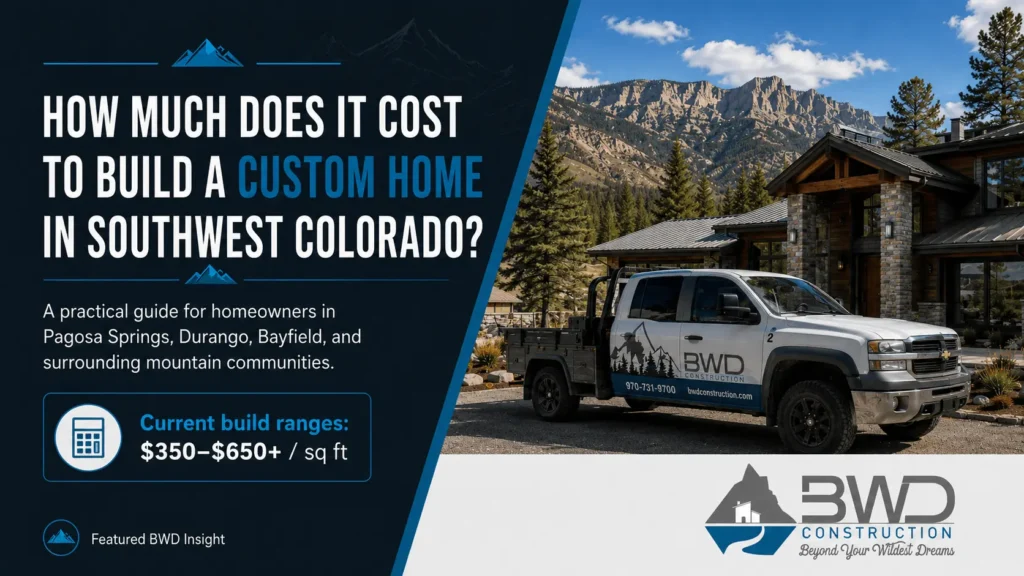
A less expensive parcel can become the more expensive choice once those items are included. On the other hand, a lot with a higher purchase price may already have an easier building area and shorter utility runs. Comparing the cost of a ready-to-build site, rather than the land price alone, gives you a much clearer picture.
Use Your Due Diligence Period Wisely
Before signing, work with your real estate professional and, when needed, an attorney to set up enough time and appropriate contract terms to review title, survey, access, water, wastewater, utilities, and the site itself. Colorado’s land purchase contract addresses many of these topics, but the dates and protections in an actual transaction deserve careful attention.
Bring a builder into the conversation while you can still make an informed choice about the property. A preliminary site review will not replace permits or engineering, but it can reveal the questions worth answering before you buy.
Build on the Right Foundation
The right Colorado lot is one that supports the home you want, the budget you have, and the way you hope to live. A little investigation before closing can save major changes later and help you move into design with confidence.
If you are considering land in Pagosa Springs or Southwest Colorado, contact BWD Construction. Tell us what you hope to build and where you are in the buying process. We can help you think through the construction side of your decision and plan the next steps toward a home that fits the land.
[…] For a closer look at the questions to ask before purchasing, read Buying Land in Colorado Before Building: What to Check First. […]